Welcome to Schwerin. Let us introduce Schwerin… Part 3.

As you have read in parts 1 and 2, Schwerin is a city with more than enough challenges and contrasts.
The castle in the middle of the city (a 20-minute walk from our house) is beautiful, the center has a charming German atmosphere, but the Plattenbau in the suburbs is anything but charming.
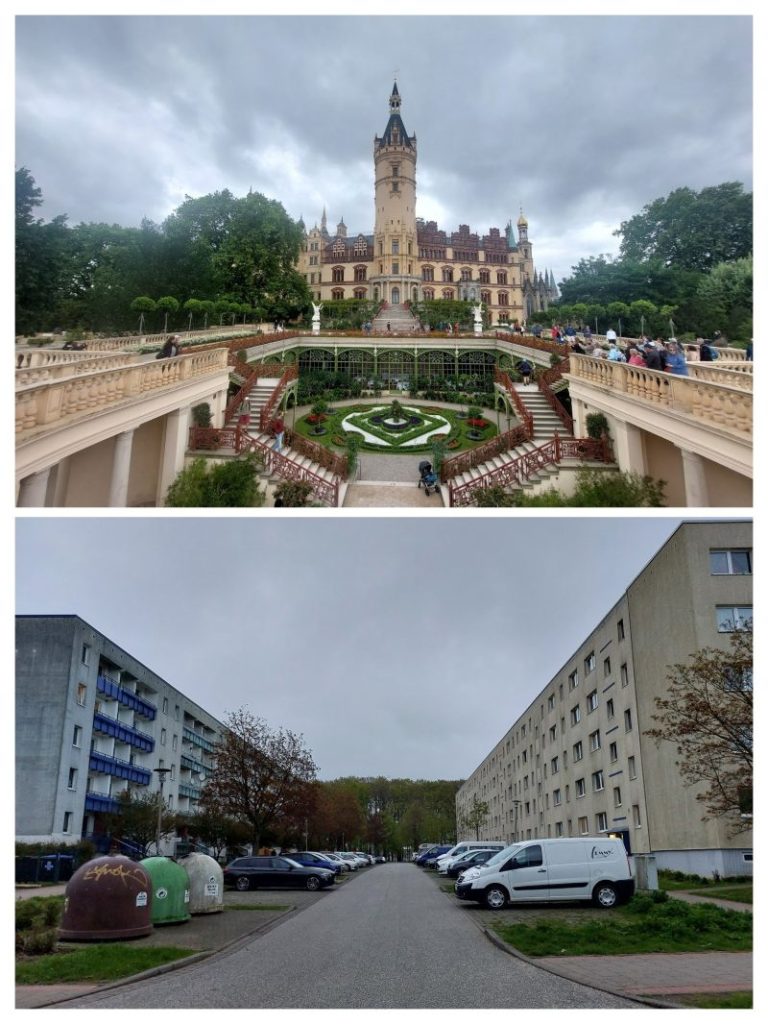
So just as not everything in the old GDR was bad, the same can be said for Schwerin today.
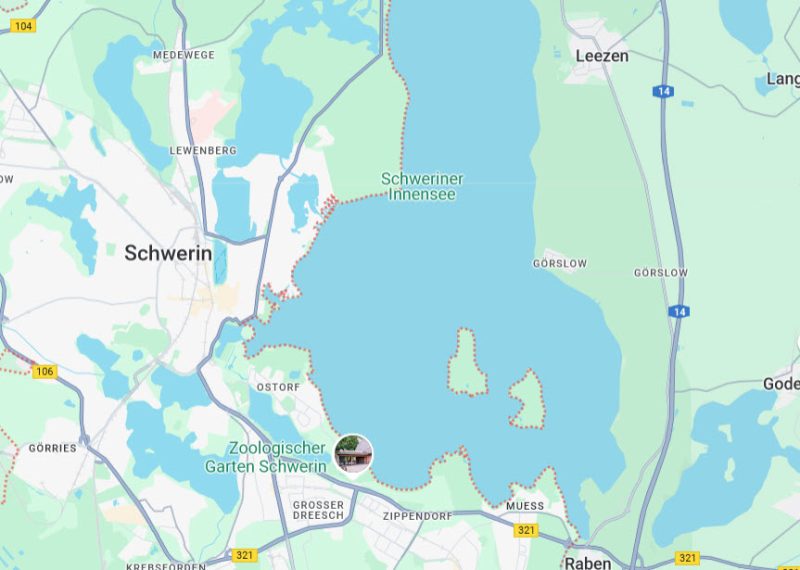
Schwerin is also an area with lakes. A lot of lakes. The city is built around them, so you’re always close to a lake. (For example, we have a view of the Ostdorfer See.) Absolutely beautiful, and if you love nature, it’s truly a treat.
There are bike paths everywhere, public transport is well organized, there’s a nice zoo, interesting museums, and the province is wonderfully peaceful—a great place to spend a holiday.
And now, a new group of residents has arrived: the Ukrainians. By March 2022, more than 2,000 Ukrainian refugees had arrived in Schwerin, of which about 1,319 people were officially registered with the city authorities as of March 2022. However, the actual number is higher, as more people were not registered, and the refugee flow continued after March 2022.
The reception of these refugees is very different from Poland, where we previously lived. In Poland, they are given a work permit from day one, and then for the most part, they have to figure it out themselves. In Germany, however, it’s different. They are provided with housing and a welfare allowance, which is a different issue in Poland (finding a home? Good luck! Work? Good luck!). This has both pros and cons.
In the first year in Poland, it’s tough for the Ukrainians because they receive less support and must do much more on their own. In Germany, the first year is easier because there are better provisions (welfare and housing). In the short term, Germany seems like a better choice (if there is even a choice, but that’s another issue).
However, in the long term, we see something different. While Ukrainians in Poland typically find work and rent a home within six months (everyone works), in Germany, the situation is different. They live off welfare for months or even years. Yes, they all have homes, but deeper integration in Germany seems to be happening much more slowly. Which of the two approaches is better, we don’t know (and we have no influence over it), but they are definitely different, and they absolutely affect integration.
Language is another issue. While Dutch is relatively close to German, Ukrainian is more closely related to Polish… but not at all to German.
Ukrainians in Poland quickly learn the language and can manage with Polish within a few months, but that’s really different in Germany. Not only do Ukrainians learn German much(!) slower, but also, the acceptance from Germans of someone who doesn’t speak German is different. The acceptance of Ukrainians in Poland who don’t yet speak Polish is not a problem, but in Germany, due to the culture, it is. Whether that’s good or bad, we don’t know, and we have no opinion on it, but the difference is clear.
Psychosocial issues are (unfortunately) universal. They are all refugees, many have experienced trauma (whether processed or not), and most are carrying serious psychosocial issues. Seeking help is difficult (if not impossible) in a language they don’t speak, and in a country with a completely different culture. So, that’s why our focus for these target groups remains the same. Yes, the environment is different, but the psychosocial issues… unfortunately… remain the same.
With that, we conclude the introduction to Schwerin. An atheist city with plenty of refugees, high unemployment, low average income, but also (especially the city center) a beautiful city in a lakeside region where you can live and truly enjoy life. And for us? There’s more than enough to do… and that’s actually bad news because it’s a beautiful city.