Welcome to Schwerin. Let us introduce Schwerin… Part 1.
When you read this, we’ll officially be living in Schwerin, the capital of the German state of Mecklenburg-Vorpommern. Let’s introduce Schwerin to you by sharing what we’ve heard in conversations with its residents—people who are also part of the groups we aim to serve. This is their story, offering a glimpse into the challenges faced in this part of Germany today. But to understand what’s going wrong now, we first need to look back at the past.
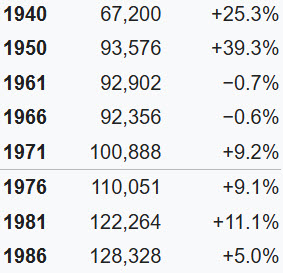
Compared to many other German cities, Schwerin was largely spared from heavy destruction during World War II. The city had no major strategic industries or infrastructure that would have made it a priority target for Allied bombings. As a result, only a few buildings were damaged, and the historic center, with its medieval and baroque architecture, remained mostly intact. However, there were smaller attacks and incidents in the surrounding areas, and near the end of the war, refugees passed through Schwerin, leading to overcrowding and tensions. To give an idea: in 1940, Schwerin had a population of 67,200, which had grown to 93,576 by 1950.
The city avoided the large-scale bombings that devastated places like Dresden or Hamburg. This means that Schwerin’s old town is still beautifully preserved and perfect for strolling through today. Schwerin was taken over on May 2, 1945, by the 82nd U.S. Airborne Division. The city fell without significant fighting, as German defenses had mostly collapsed by that point. Schwerin initially fell under the American occupation zone.
Later, in accordance with agreements made by the Allies at the Yalta Conference, American forces withdrew, and on July 1, 1945, Schwerin was handed over to the Soviet Union. The area became part of the Soviet occupation zone and eventually the German Democratic Republic (GDR).
Schwerin remained part of East Germany until October 3, 1990. Forty years of communism left a lasting impact, with consequences that are still felt today.
Was everything bad in the GDR? No, definitely not. Everyone was guaranteed work (though the quality of that work is another question), healthcare, housing (again, the quality is debatable), and education. These things were (relatively) well organized, provided that you cooperated with the communist regime of the time. If you didn’t, you faced serious problems.
Religious freedom? A tricky subject, because communism promoted atheism, Marxism, Leninism, Stalinism, and anti-capitalism. And you can still feel the impact of that today—whether you like it or not, it’s still present.
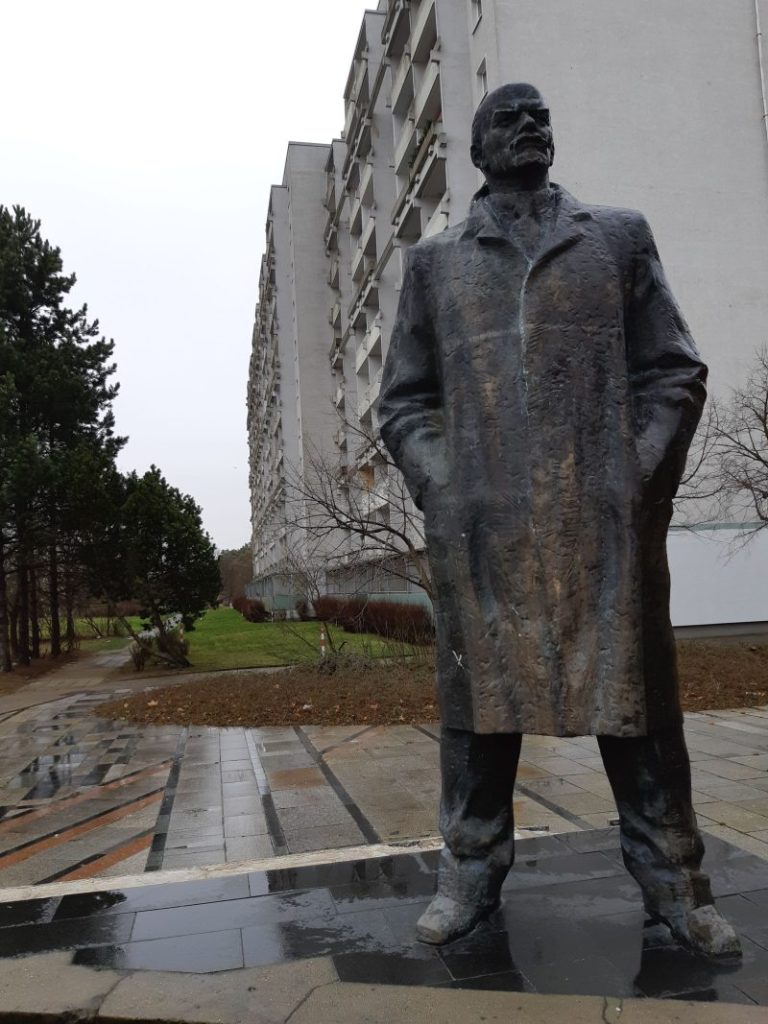
So, not everything was bad, no. But certainly not everything was good either—far from it. Let’s take a step back to those housing conditions…
A true GDR product is the Plattenbau—standard “flat-pack apartment blocks.” Schwerin has entire neighborhoods full of them. In the district of Großer Dreesch alone, there are 4,900 such apartments, with thousands more in areas like Neu Zippendorf and Mueßer Holz. Speed of construction was prioritized over quality, and you can definitely tell.
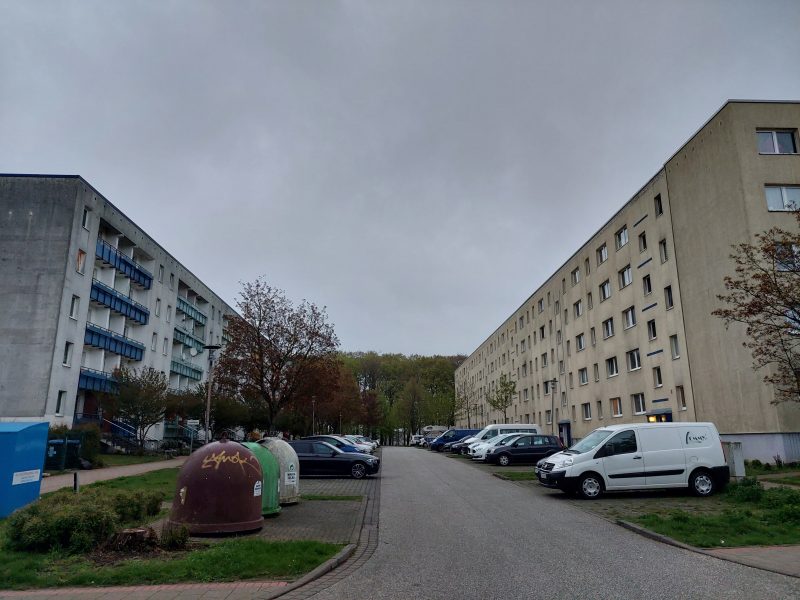
You can literally see the construction of those Plattenbau neighborhoods reflected in the population growth figures. Take note:
One of those neighborhoods with Plattenbau is Großer Dreesch. Construction began in 1971 and continued into the 1980s. You can see the population growth in Schwerin directly linked to the building of those neighborhoods. Until 1986, there was a strong, steady growth:
However, when the Berlin Wall fell on November 9, 1989, many people (including from Schwerin) went to the “West” and never returned. Additionally, there were about 8,500 state-owned companies in the GDR that couldn’t keep up with the “capitalist” West.
The program through which companies in the GDR were transferred or privatized after the fall of the Berlin Wall was known as the Treuhandanstalt (or Treuhand for short). This organization was established in 1990 with the goal of transforming the GDR’s state-owned companies into a market economy by privatizing, restructuring, or, if necessary, shutting them down. The Treuhandanstalt was responsible for managing these approximately 8,500 state-owned companies, which made up a significant portion of the East German economy.
The process was highly controversial because many companies were sold to West German or international investors at very low prices, leading to massive unemployment and economic decline in some regions. Schwerin was one of those areas affected…
And you can see that reflected in the population figures in the next chart. After the fall of the Wall, the growth quickly turned into a massive decline. From 128,328 in 1986, it plummeted to 95,740 in 2021. A city doesn’t improve with that kind of drop…
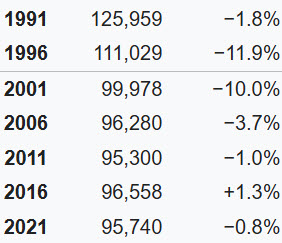
Practically speaking, this meant that many of those flats were left empty, but also that there was no work for a lot of people, which led to even more leaving and never coming back. I think you can picture the bleak situation now, right? But are we done?
No, unfortunately not… not by a long shot. Take a good look at 2016… where does that sudden growth come from, while the rest is only experiencing a sharp decline? We’ll look into that in part 2.
Sources:
- https://en.wikipedia.org/wiki/Schwerin
- https://nl.wikipedia.org/wiki/Conferentie_van_Jalta
- https://de.wikipedia.org/wiki/Land_Mecklenburg
- The residents of Schwerin we have personally spoken to.