More Than a Meal: Why and How We Distribute Food Vouchers
On this side, we distribute meal vouchers that allow people experiencing homelessness to receive a meal from an initiative we work closely with. We personally hand out some of these vouchers on the streets and during our contacts with the people we serve. In addition, we provide meal vouchers to other initiatives in the city, so they can distribute them to the people they meet.
The arrangement is simple: we pay for the meals, another initiative prepares and serves them, and both we and our partners distribute the vouchers.
On paper, that sounds straightforward. Hand in a voucher, receive a meal, done.
But there is much more behind it than just a plate of food.
In fact, to be completely honest, it is not really about the meal itself. The meal is a means, not an end. Behind every meal voucher is an idea, an approach, and a number of goals that we hope will contribute to positive change in someone’s life.
1: Get moving!
We usually distribute the meal vouchers in the city center. The location where the meal can be collected, however, is not in the center. Quite the opposite.
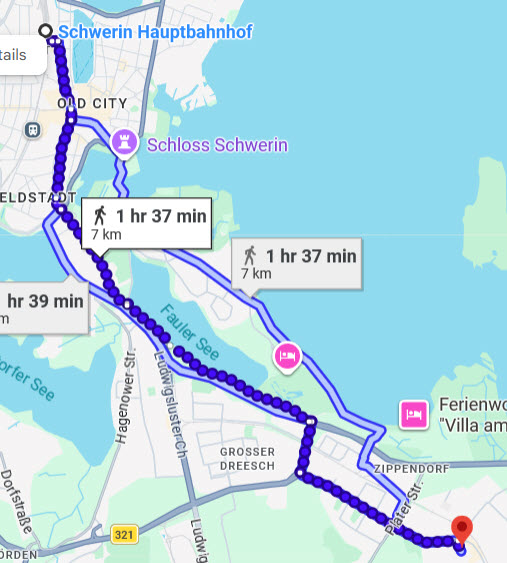
By public transport, it takes about half an hour to get there. Walking takes roughly an hour and a half.
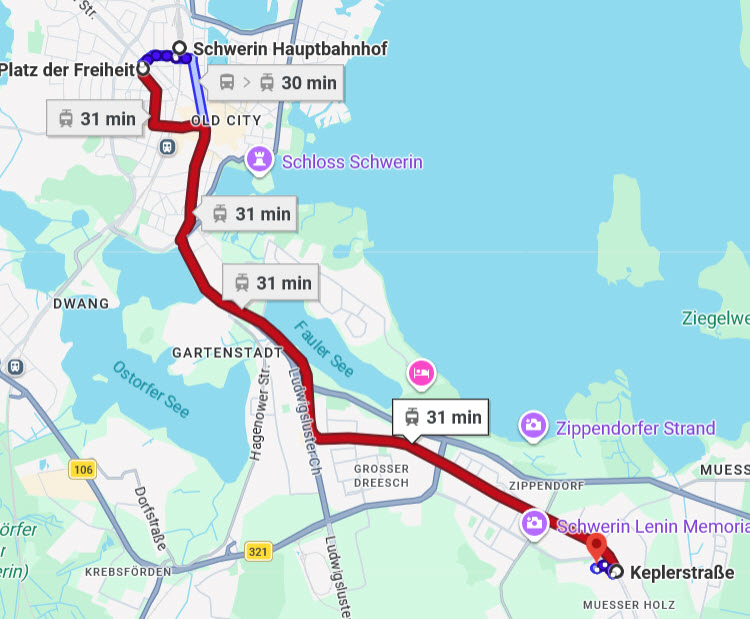
That means people have to think about how they will get there. Perhaps by collecting deposit bottles to pay for a tram ticket, or by putting on their walking shoes and making the journey on foot.
In doing so, we achieve our first goal: getting people moving.
Physical activity has proven positive effects on both body and mind. During exercise, the body produces substances such as endorphins, dopamine, and serotonin. These neurotransmitters play an important role in motivation, mood, and the experience of pleasure. Regular exercise also helps people cope better with stress and supports mental resilience.
Many people experiencing homelessness struggle with depression, low mood, or other mental health challenges. In those situations, a vicious cycle often develops: withdrawing from others, becoming less active, and having fewer positive experiences. Movement helps break that cycle.
That is why our foundation does not provide tram tickets. We encourage people to find their own solution. By walking, cycling, receiving help from others, or finding another creative way.
For the same reason, we never hand out multiple meal vouchers at once. One voucher at a time. Anyone who would like another voucher can return to one of our distribution points the following day. This naturally creates movement between the place where the voucher is received and the place where the meal is collected.
If someone receives two vouchers per week, that is perfectly fine with us. But we believe it is reasonable for that to involve a small effort: getting moving.
2: Effort creates a sense of accomplishment
For most people, effort comes before results. We work for our income, buy groceries, and prepare our meals. We believe this principle is also important for people experiencing homelessness.
Of course, we understand that not everyone is in the same situation. Still, we do not believe it is healthy when everything comes automatically. It is easy to become stuck in boredom, passivity, and hopelessness.
By arranging their own journey to the meal location, people learn a simple but valuable lesson: effort produces results. When someone finally sits down to enjoy a warm meal, they have done something to earn it. That creates a sense of satisfaction. It is a small step, but a step toward taking responsibility for one’s own situation.
In this way, we gently encourage skills that are also important for employment and participation in society. And with that, goal number two is achieved.
3: Building a social environment
One of the biggest challenges of homelessness is often loneliness.
Friends from the past may have disappeared from view. Trust in others may have been damaged. A person’s social network is often small or completely absent.
That makes life on the streets even more difficult.
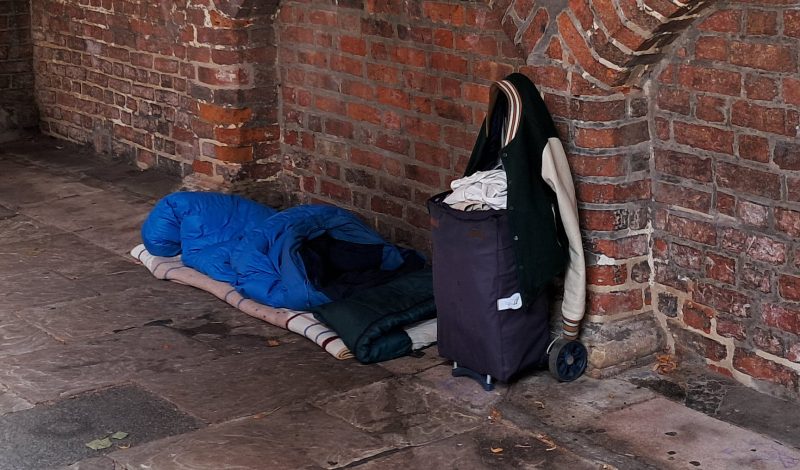
People who have a network often receive information about support services, housing opportunities, job possibilities, or places where assistance is available. There may be someone who accompanies them to an appointment, helps with paperwork, or even has an old phone they can spare. Without those connections, everything must be figured out alone.
That is why we agreed with the initiative providing the meals that it should not only be about food. People also receive attention. A conversation. A listening ear. A place where someone takes an interest in them. In fact, we even pay extra for that.
Our hope is that small connections will develop there. Perhaps even the beginnings of friendships. That people discover there are still others they can trust and turn to when they need help.
There is an old saying: it’s not what you know, it’s who you know. By connecting people with others, we hope to gradually make their world a little larger again.
4: A good meal
Only after the first three goals comes the fourth goal: a good meal. A healthy meal may seem ordinary to many people, but for someone living on the streets, it often is not.
A warm meal containing vegetables, vitamins, and proper nutrition can make a significant difference. Not cans of beer or energy drinks as meal replacements, but real food that nourishes the body and provides energy.
That may sound normal, but for many people in vulnerable situations, it is anything but.
5: Learning to deal with disappointment
The number of meal vouchers we can distribute is limited. When they are gone, they are gone. That means someone may enjoy a good meal today, while tomorrow no voucher is available. That can be disappointing.
Yet disappointment is also part of life. Not everything is always available when we want it. We do not want to hide that reality. At the same time, we are happy to point people toward the opportunities that do exist. Because anyone who does not want to depend on the availability of meal vouchers can take steps themselves. And that brings us to goal number six.
6: Take action yourself!
At the location where the meals are provided, there is an opportunity to earn a meal almost every day.
How? By helping out.
Helping in the garden for a few hours, assisting in the woodworking shop, washing dishes, or contributing to the initiative in some other way. Those who participate receive a meal in return.
That is why we sometimes even hope that someone feels disappointed when no meal voucher is available. Not because we wish anyone harm, but because disappointment can lead to action. Perhaps someone then decides to get involved. To influence their own situation. To stop depending entirely on what others give and begin taking the steering wheel of their life back into their own hands. These are often small steps, but it is often those small steps that eventually make the difference.
Guiding through responsibility
We also intentionally use the meal vouchers to gently influence behavior and choices. Not in a harsh or judgmental way, but with a clear sense of direction.
Someone who demonstrates that they are actively working toward change, recovery, and taking responsibility is more likely to qualify for additional support than someone who consistently chooses to spend their money on things that keep them trapped in the same situation, such as drugs, cigarettes, or paid sex.
This is not a punishment system but a form of healthy boundaries. We do not want to indirectly contribute to maintaining addiction or destructive patterns through resources intended to meet basic needs such as food.
If someone chooses to prioritize substance use over food, that is ultimately a personal decision, along with its consequences. We cannot and do not want to support those choices financially through food assistance.
Our efforts remain focused on recovery, stability, and helping people regain control over their own lives. Clear boundaries are part of that, including how we distribute vouchers.
Conclusion:
At first glance, the meal vouchers we distribute seem to be about food. In reality, they are about much more than that.
They are about movement. Activation. Social connections. Taking responsibility. Learning to deal with setbacks. And ultimately, also about a healthy meal.
Every meal voucher is intended as a small push forward. Not as a permanent solution, but as a step toward recovery.
Step by step. Through successes and failures. From surviving to living. From dependence to self-direction. And hopefully, one day, from the streets to a safe place that truly feels like home again.
Finally:
Of course, we know that not everyone always uses our meal vouchers honestly. There will always be people who try to take advantage of something intended to help others. Nevertheless, we do not see that as our responsibility.
We believe that the resources we are allowed to distribute ultimately come from God. The meal vouchers are not ours, the money is not ours, and therefore we do not feel the need to control everything down to the smallest detail.
If someone deliberately abuses something intended for good, that responsibility ultimately does not rest with us. It is something that person will have to answer for themselves, sooner or later.
“So then, each of us will give an account of ourselves to God.” (Romans 14:12)
New International Version
That conviction gives us peace. It prevents us from getting trapped in endless controls, distrust, and micromanagement. Because once you start constantly monitoring every voucher, every meal, and every person, the focus shifts from helping to controlling.
That does not mean we are naïve. We know, for example, that a significant number of the vouchers we distribute are never redeemed. Rest assured: an unused voucher costs us nothing, because we only pay when a voucher is actually exchanged for a meal. Yet we do not consider those unused vouchers a waste. Sometimes a person’s circumstances change, sometimes a voucher is forgotten, and sometimes we simply do not know what happened to it.
Our task is not to control everything. Our task is to distribute what has been entrusted to us. What people do with that opportunity afterward is ultimately up to them.
That is why we distribute the vouchers with an open hand: without distrust, without endless control mechanisms, and without hidden conditions. We sow seeds. What grows from them is not entirely in our hands. That trust gives us the freedom to keep giving.
Will you join us?
Each meal costs us €10. As you have read, that €10 provides far more than just a meal. It creates a moment of care, a step toward movement, a personal connection, and sometimes simply a little peace and humanity in someone’s day. The complete package for one homeless person—meals, soap, shampoo, sometimes clothing or a sleeping bag—amounts to approximately €25 per person.
Would you help pay for one (or more)? (click) On behalf of the people this is intended for: thank you for your support.